Coins are among the most systematically catalogued antiques, which makes them satisfying to identify. Four attributes do the heavy lifting: the country and denomination, the date, the mint mark and the grade (condition).
Handle coins by the edges and never clean them — cleaning can destroy a collectible coin’s value.
Identify country, denomination and date
Start with the obvious: what country issued it, what denomination, and the date. Legends may be in another language or script — note the ruler’s portrait or emblem, which helps place undated or foreign coins.
Find the mint mark
A small mint mark — often a single letter — tells you where a coin was struck, and can make two coins of the same year wildly different in value. Learn where the mint mark sits for the series you’re examining.
Judge the metal and grade
Gold, silver, copper and modern alloys carry very different intrinsic values. Then grade the condition: sharpness of detail, lustre and wear. Numismatic grades run from heavily worn to uncirculated, and grade can multiply value many times over.
Check for varieties and errors
Some dates, mint marks, die varieties and striking errors are far scarcer than the common version. It pays to compare your coin against catalogued varieties before deciding what it is.
Quick checklist
- Identify country, denomination and date
- Locate the mint mark
- Determine the metal
- Grade the condition honestly
- Check for scarce varieties or errors — and never clean it
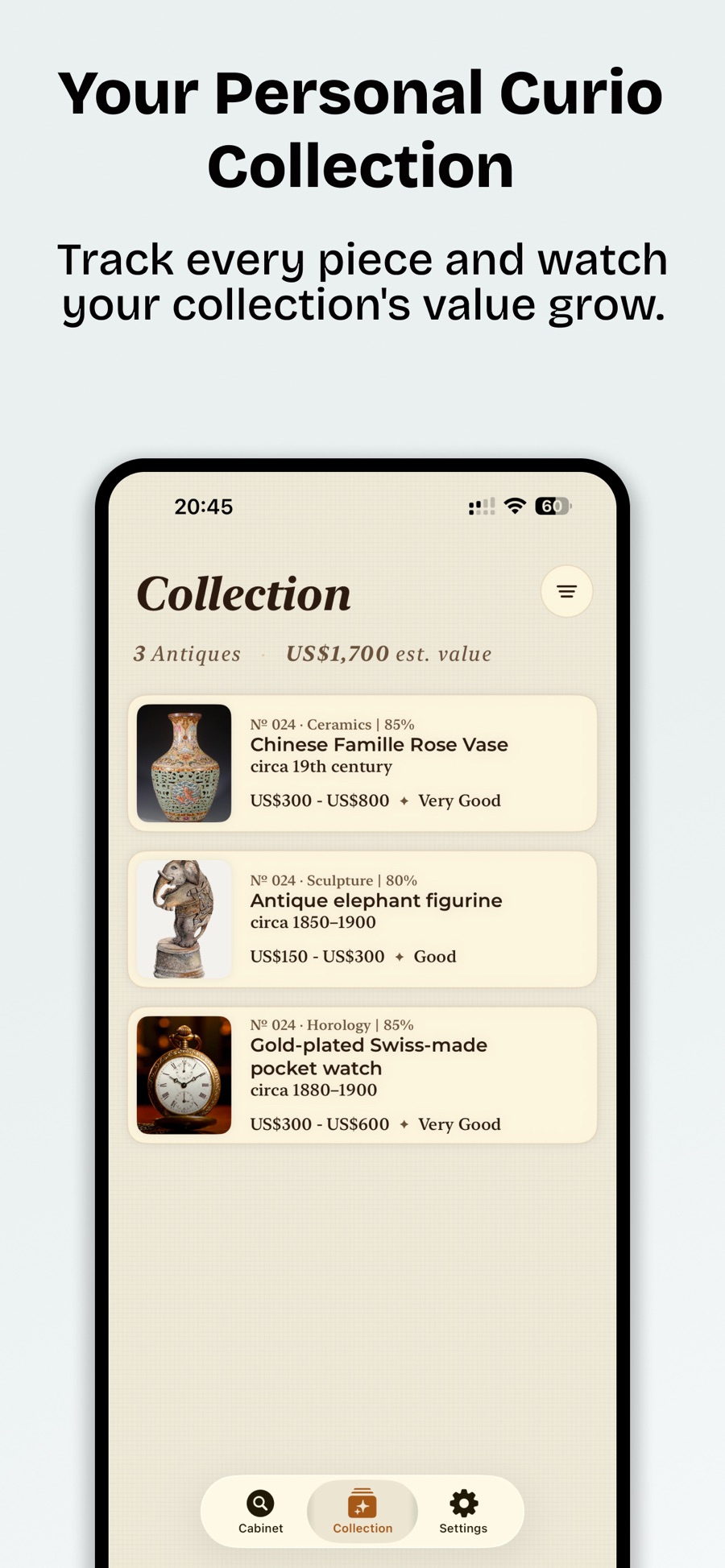
Do it in seconds with Curio
Curio speeds up coin ID and valuation:
- Photograph both sides of the coin in good light
- Curio identifies the likely type, era and metal
- Get an estimated value range and rarity so you know what to keep
Frequently asked questions
Should I clean an old coin before identifying it?
No. Cleaning almost always lowers a collectible coin’s value. Photograph and identify it as-is.
Why are two coins of the same year worth different amounts?
Mint mark, die variety and — above all — grade. A small difference in condition or mint can mean a large difference in value.
Can Curio identify foreign or ancient coins?
It identifies a wide range of coins and currency from a clear photo of both sides, and estimates era and value.