There is no single “price” for an antique — only what a willing buyer will pay in a given situation. That’s why professional valuations come as a range, and why the same object can be worth one figure for insurance and another at a quick sale.
Four factors move the number more than anything else: condition, rarity, demand and provenance. Understand these and you’ll never be caught out by a lowball offer again.
The four things that drive antique value
- Condition: a clean, undamaged, structurally sound piece is worth far more than a chipped or over-restored one.
- Rarity: scarce styles, short production runs and unusual variants command premiums.
- Demand: tastes change; a currently fashionable maker or era sells for more.
- Provenance: documented history, a known maker’s mark or a notable previous owner adds value.
Insurance, retail and quick-sale values are different
Ask “worth for what?” An insurance / replacement value is the highest — what it would cost to replace. Retail is what a dealer might ask. A quick-sale or dealer-offer figure is the lowest — what you’d get selling fast. Knowing all three stops you from selling low or over-insuring.
How to research a price yourself
The fastest free benchmark is sold listings (not asking prices) on marketplaces and auction archives. Search the exact maker, pattern and era, and look at what comparable pieces actually closed at. Museums, collector forums and price guides help refine it.
When to get a formal appraisal
For a genuinely valuable, insured or estate item, commission a certified appraiser. App and DIY estimates are perfect for triage — deciding what’s worth a professional’s time — but they are not a certified appraisal.
Quick checklist
- Grade the condition honestly
- Judge rarity vs common versions
- Check current demand for the maker/era
- Find sold comparables, not asking prices
- Separate insurance, retail and quick-sale figures
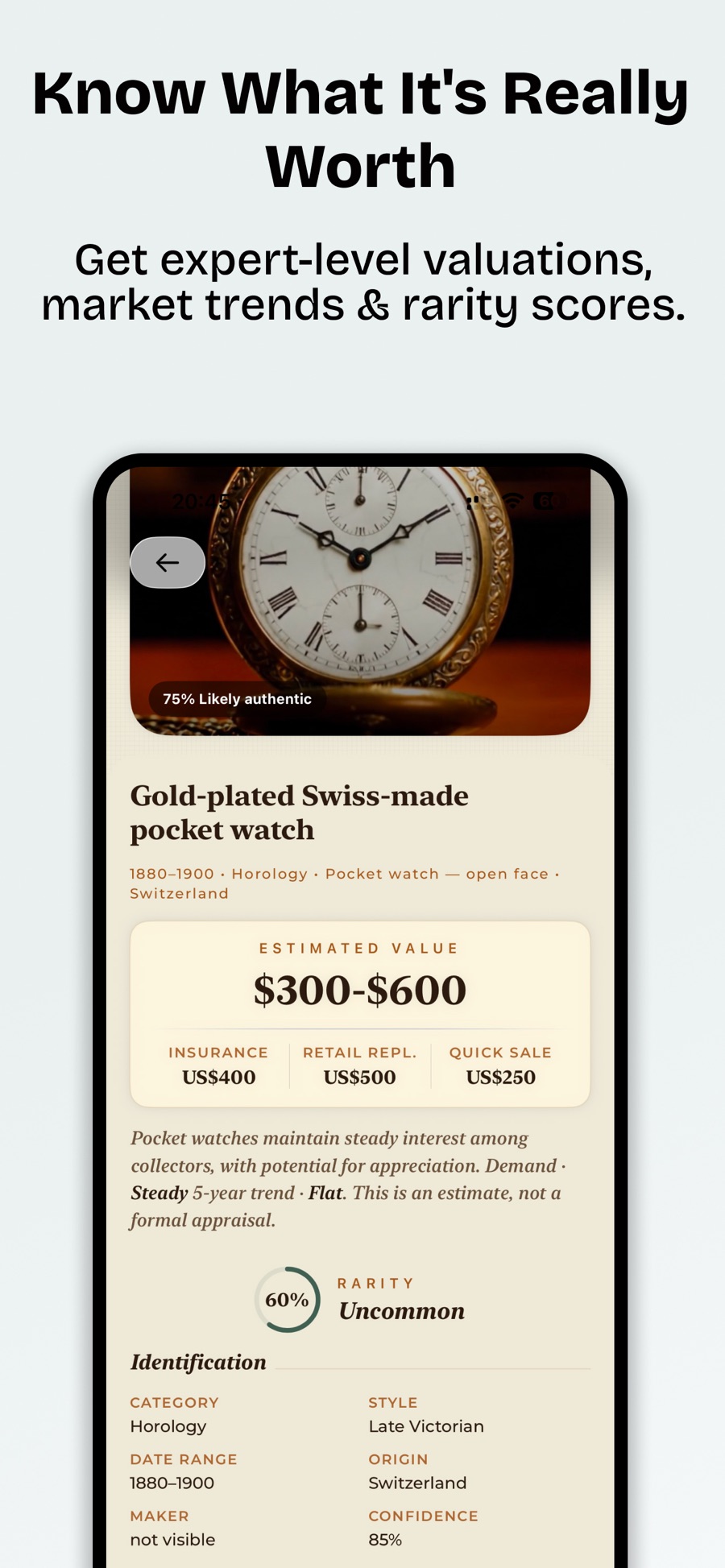
Do it in seconds with Curio
Curio turns all of that into an instant estimate:
- Photograph the item to identify it
- Curio returns an estimated value range with insurance, retail-replacement and quick-sale figures
- See a rarity score and market trend so you know whether to hold, sell or insure
Frequently asked questions
How does Curio estimate value?
It combines the identified category, era and condition with comparable pieces to produce a value range, including insurance, retail and quick-sale figures.
Is an app estimate the same as an appraisal?
No. It’s a fast, informed estimate for triage. For insurance or a major sale, follow up with a certified appraiser.
Why is my antique worth less than the asking prices I see online?
Asking prices aren’t sold prices. Real value is what comparable items actually sell for, adjusted for condition and demand.