Ceramics are marks-driven. A single backstamp can name the pottery, the country of origin and — through changes in the mark over time — the decade a piece was made. Learning to read those marks is the core skill.
Beyond the mark, the body and glaze tell you whether you’re holding earthenware, stoneware or true porcelain.
Read the backstamp
Check the underside for a painted, printed or impressed backstamp. Note every element: the maker’s name or symbol, a country of origin, pattern names and any numbers. “England,” “Made in …” and specific wording were introduced at known dates, which helps you narrow the era.
Tell porcelain from pottery
Hold the piece to the light: true porcelain is translucent and rings when tapped; earthenware and stoneware are opaque and duller. The body colour at an unglazed foot rim and the glaze texture help you classify it.
Examine the glaze and decoration
Hand-painted decoration shows slight variation and brush texture; transfer prints show fine, repeatable line work; decals sit flatter still. Crazing (fine glaze cracks) can indicate age but is also faked, so weigh it with other clues.
Watch for reproduction marks
Popular marks get copied. A blurry, oversized or wrongly coloured version of a famous mark, or one printed when it should be impressed, is a warning sign. Match the exact mark to the maker’s known marks for the period.
Quick checklist
- Photograph the backstamp clearly
- Note country wording and pattern numbers
- Test for translucency (porcelain vs pottery)
- Judge hand-painted vs transfer decoration
- Check the mark against known references
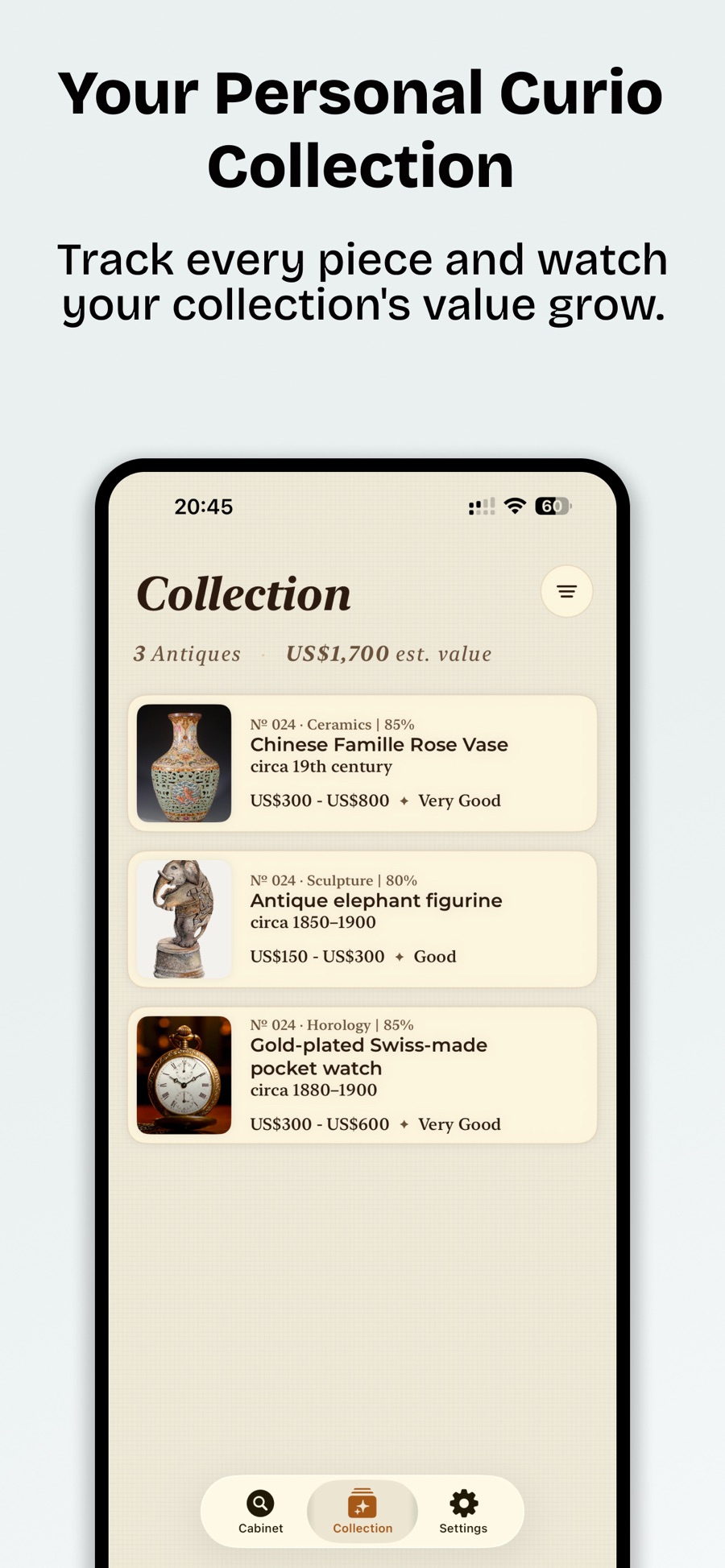
Do it in seconds with Curio
Marks can be hard to match by hand — Curio does it instantly:
- Photograph the piece and a close-up of the backstamp
- Curio identifies the likely maker, country and era
- Get a value range plus care tips for the glaze and body
Frequently asked questions
Where is the maker’s mark on pottery?
Almost always on the underside — the foot rim or centre of the base. Some pieces are also marked inside a lid or on the back rim.
What if my ceramic piece has no mark?
Many genuine pieces are unmarked. Curio identifies from the form, body and decoration, and notes what a mark would confirm.
How do I know if a porcelain mark is fake?
Compare it precisely to the maker’s documented marks. Wrong colour, wrong technique (printed vs impressed) or wrong wording for the era are red flags.