Reproductions aren’t always dishonest — many were made as affordable homages. The problem is when a copy is sold at a genuine-antique price. A few minutes of checking protects your money.
Authenticity comes down to consistency: a real antique’s age should show in its materials, wear, marks and construction all at once. When one of those doesn’t match, be suspicious.
Tell-tale signs of a reproduction
- Materials that are too modern: plywood, plastics, machine-perfect glass or synthetic stones in a supposedly old piece.
- Wear in the wrong places: genuine wear appears where hands and surfaces touch; fakes are often “distressed” evenly all over.
- Crisp, fake-aged marks: a suspiciously sharp “antique” stamp, or a mark that doesn’t match the maker’s known marks for that era.
- Perfect symmetry: handmade antiques carry small irregularities; flawless uniformity suggests machine production.
Check the construction
Turn the piece over and look at how it’s joined. Hand-cut dovetails of slightly uneven size, hand-forged nails, oxidised screws with irregular threads and saw marks from a hand tool all point to age. Phillips-head screws, staples and modern glue point to a later date.
Verify the mark against known references
Makers changed their marks over time. A mark that exists but belongs to the wrong period — or is printed rather than impressed when it should be impressed — is a red flag. Cross-check against a marks reference or let an identifier match it for you.
When in doubt, get a second opinion
For high-value pieces, combine a quick digital check with a specialist dealer or appraiser. The cost of an opinion is tiny next to the cost of a mistaken purchase.
Quick checklist
- Do the materials match the claimed age?
- Is the wear natural and in the right places?
- Does the mark match the maker’s known marks?
- Is the construction hand-made or machine-made?
- Does everything tell the same story?
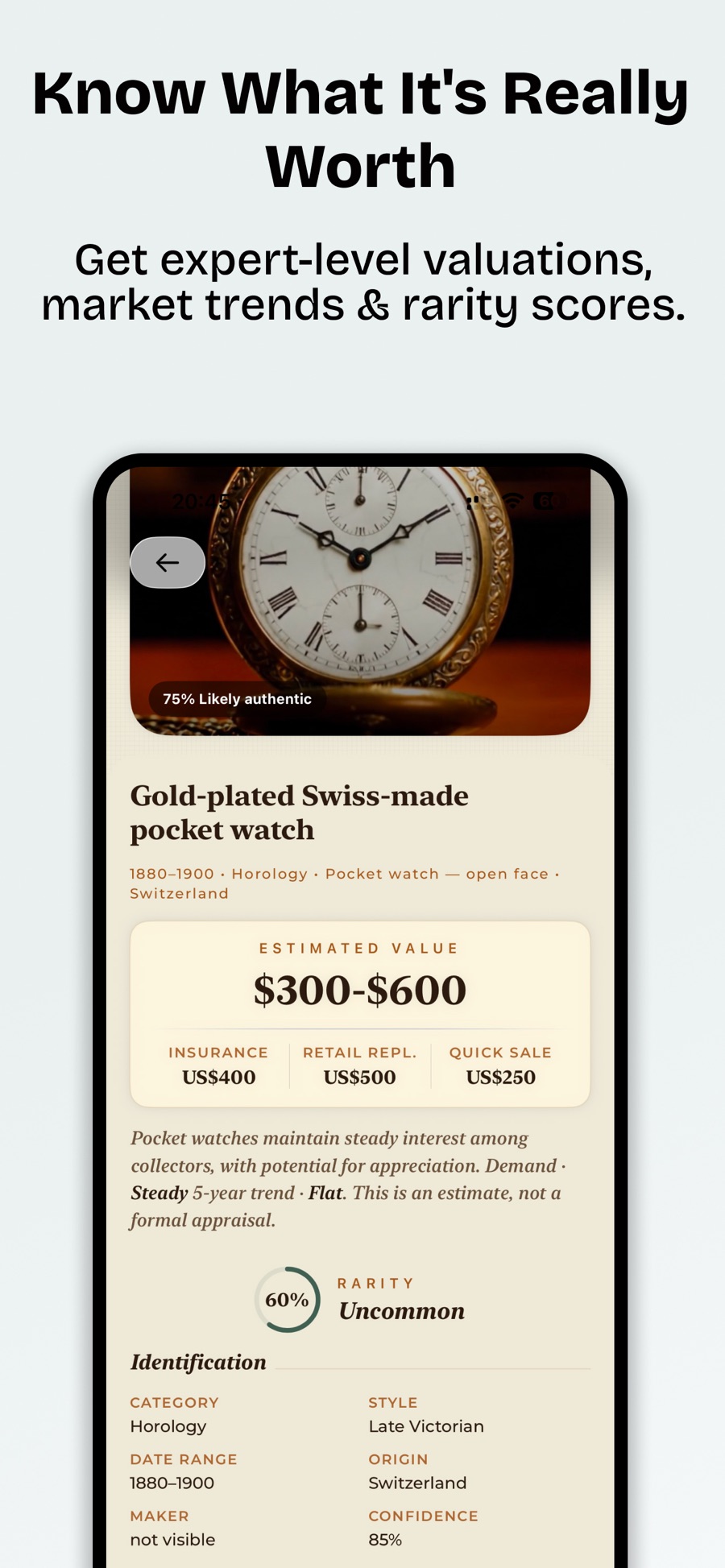
Do it in seconds with Curio
Curio gives you a fast authenticity read on any piece:
- Photograph the item and a close-up of any mark
- Curio shows an authenticity confidence signal and flags tell-tale details
- Use its notes on materials, wear and marks to decide before you buy or sell
Frequently asked questions
Can an app prove my antique is genuine?
It gives a strong authenticity signal and points out what to check, but a definitive verdict on a high-value piece should come from a specialist appraiser.
Are reproductions worth anything?
Sometimes. Older, well-made reproductions can have their own collectible value — just not the price of the original.
What’s the fastest authenticity check?
Materials and construction. Modern materials or machine-made joinery in a “very old” piece is the quickest giveaway.